
Key Takeaways
- Fragmented advisor content workflows are not just inefficient, they create measurable compliance, brand, and supervision risk across a distributed field force.
- The core challenge is structural, not individual: too many repositories, informal edits, and manual approvals make consistent, compliant communication almost impossible at scale.
- A friction free workflow embeds governance into every stage, so advisors can move quickly while compliance maintains full visibility and auditability.
- Role based access, governed personalization, integrated approvals, and multichannel distribution from a single hub are the structural foundations of a modern workflow.
- A six stage model from login to share gives leadership a practical way to audit where workflows break down and where fixes will deliver the greatest impact.
- When discovery, supervision, and measurement are unified, firms can link content usage to meetings and pipeline, justify platform investment, and refine what they produce.
Article at a Glance
Most advisor content workflows look orderly on paper. The moment you trace every step from login to share, you see duplicated files, informal edits, approval chains running through personal email, and advisors using whatever they can find fastest instead of what was approved. The result is predictable: supervision gaps, inconsistent messaging, and wasted advisor capacity.
This is not a failing of individual advisors or compliance officers. It is a design problem. A fragmented stack of drives, point tools, and manual processes cannot produce consistent, exam ready outputs, no matter how diligent the people are. Leadership teams that treat the workflow as operational infrastructure, not a loose collection of tasks, are the ones who reduce regulatory exposure while actually making it easier for advisors to communicate.
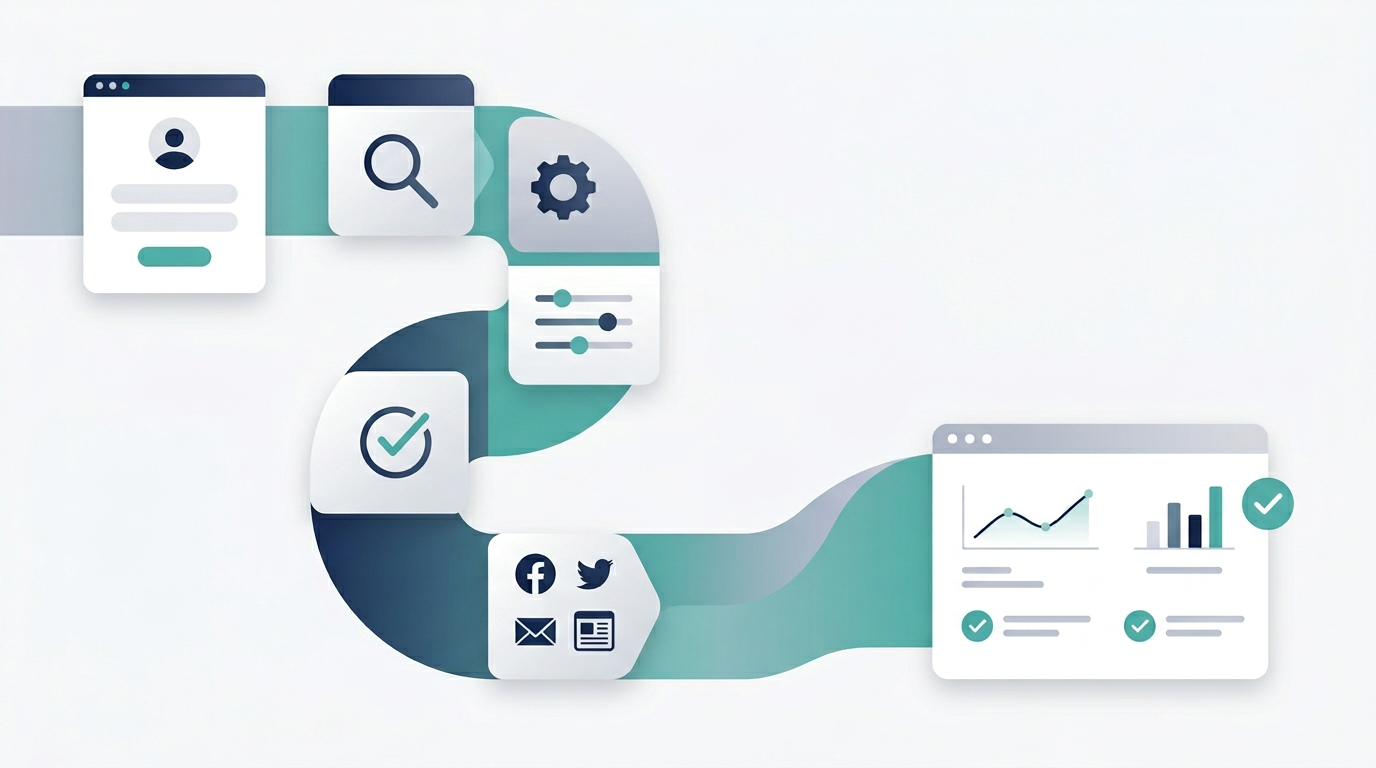
A modern, friction free workflow gives each advisor a single place to log in, find the right content, personalize within defined guardrails, route for approval when needed, distribute across channels, and have every step recorded without extra effort. The sections that follow map that workflow, highlight common failure modes, and lay out a practical model leaders can use to redesign their own stack.
Why Advisor Content Workflows Break Before They Start
The foundational problem is rarely a lack of content. Most firms have more content than any one advisor can use. The issue is that it sits in too many places with no reliable signal for what is current, approved, and appropriate for a given client situation. The workflow breaks long before an advisor hits send, at the point where they first try to access what they need.
When content is scattered across shared drives, email threads, personal desktops, and vendor portals, the system cannot produce consistent outputs. Each advisor develops their own approach to navigating the mess. One advisor builds a private folder of favorite pieces. Another forward saves attachments from colleagues. A third reuses a campaign from last year because they remember it performed well and can find it quickly. The firm ends up with a distribution network that behaves like hundreds of individual decisions instead of a governed process.
For leadership, this fragmentation has two immediate consequences. First, supervision coverage becomes a guess, because no one can say with confidence which version of what was sent to whom. Second, any attempt to improve the quality or consistency of communications runs into the reality that there is no single system to improve, only habits and workarounds to chase.
The Regulatory and Operational Cost of Workflow Fragmentation
Regulators expect firms to supervise communications, retain records, and demonstrate that supervision when examined. In a fragmented workflow, each of those expectations becomes harder to meet.
Common failure points include:
- Supervision gaps, when advisors pull content from local folders, old email attachments, or external sites that never passed through the firm’s governance process.
- Version control failures, where outdated materials, retired disclosures, or pre rule change documents remain in circulation because nothing in the workflow forces expiry.
- Audit trail deficiencies, when approvals happen through informal email exchanges or hallway conversations that leave no durable record of what was reviewed and approved.
- Personalization risk, where well meaning edits introduce performance claims, forward looking statements, or product language that compliance never saw.
- Retention inconsistency, when content and communications are stored in different tools, formats, and locations that do not align with the firm’s retention policy.
Each of these on its own might look minor. Across dozens or hundreds of advisors, they compound into systemic risk. Compliance officers cannot manually monitor every exception that a fragmented workflow generates. They are left reconciling systems after the fact instead of supervising a coherent process in real time.
The operational impact runs in parallel. Advisors spend time searching for content, asking colleagues for files, and reworking materials to fit a specific client situation. They wait on responses to individual approval emails. They rebuild similar pieces from scratch because they cannot locate or adapt what already exists. Viewed in isolation, each instance is only a few extra minutes. Viewed across a quarter, it is hours of lost client time per advisor.
How Manual Processes Drain Advisor Capacity and Increase Risk
Manual workflows feel safe because they keep decisions close to people. In practice, they depend on memory, personal diligence, and individual judgment, which vary widely across a field force.
Think about what a manual process demands from an advisor in a typical week:
- Identify content that fits a specific client conversation.
- Locate the most current approved version.
- Adjust it to feel relevant to that client.
- Email compliance or a manager for review, then track the response.
- Send the content through the client’s preferred channel.
- Log that activity somewhere so the record exists later.
If every step hinges on the advisor remembering what to do and where to do it, the process is fragile. Under time pressure, shortcuts are rational. An advisor uses the version they already have instead of chasing the updated file. They make a quick edit and send, trusting their own judgment on phrasing. They forget to archive the message or log the interaction. None of this is malicious. It is what happens when the system asks people to compensate for structural gaps.
From a risk perspective, each manual handoff is a point of potential failure. An old rate table goes out. A phrase that sounds harmless reads as promissory in a regulator’s file. A communication never makes it into the archive. These missteps are exactly the kinds of issues that surface in exam findings and internal audit reports. The pattern repeats because the underlying workflow has not changed.
Hidden Costs of Fragmented and Shadow Content
Beyond visible compliance issues and obvious productivity losses, fragmented workflows create more subtle damage that erodes value over time. Two of the most significant are the growth of shadow libraries and the slow drift of brand messaging.
Why Shadow Libraries Become a Structural Liability
Shadow libraries emerge when advisors cannot find what they need quickly through official channels. To keep serving clients, they create their own collections of saved PDFs, forwardable emails, and slide decks. Those collections often include:
- Older versions of firm content that felt effective and were saved locally.
- Materials passed informally between colleagues.
- Content brought from prior firms that never went through the current firm’s review.
These libraries exist because the official system does not match the pace or patterns of real work. For compliance, the problem is simple. You cannot supervise what you cannot see. A meaningful share of client facing communications now originates from a library the firm does not control.
Brand and Messaging Drift
When every advisor assembles their own set of go to materials, the firm’s story fragments. Different versions of the value proposition circulate in the field. Disclaimers vary. Visual styles diverge as people splice in new elements or reuse assets from past campaigns.
A client who interacts with more than one advisor, or simply compares communications over time, experiences a brand that feels inconsistent. For enterprise firms and large broker dealers that invest heavily in positioning, this is not a cosmetic issue. It undercuts the trust and coherence those investments are meant to create.
How Copy Paste Edits Bypass Oversight
The most common untracked modification is the quick edit. An advisor copies approved language into an email, tweaks a sentence to sound more conversational, and hits send. That small adjustment can easily introduce:
- Implicit performance expectations that were not in the original piece.
- Product language that blurs the line between education and recommendation.
- Changes to risk disclosure structure that regulators expect to remain consistent.
Advisors see these edits as good service, not as compliance events. Without a workflow that either constrains editing to specific fields or routes modified content through review, those changes happen at scale with no centralized oversight.
What a Modern Advisor Content Workflow Should Deliver
A modern workflow is not just a better content library or a faster email tool. It is shared infrastructure that aligns compliance, marketing, distribution, and advisors around one governed process.
At a minimum, leadership should expect the following experience for an advisor:
- Log in once through the firm’s identity system.
- Land on a dashboard that reflects their role and book of business.
- Find relevant, current content for a specific client situation in seconds.
- Personalize within clearly defined, enforced guardrails.
- Route items that need review through a predictable approval path.
- Distribute across channels from the same interface.
- Have every step automatically recorded for supervision and analytics.
That flow is not a stretch goal. It is the standard required for sustained adoption in a time constrained, regulated environment. When the system works this way, advisors do not need to invent workarounds. The official path is faster and safer than the unofficial alternatives.
Core Capabilities of a Governed, Central Hub
To support that standard, the platform needs specific capabilities. At a high level, these include:
- A centralized repository with version control and clear status labels (approved, pending, expired).
- Role based access so advisors see what applies to their practice, geography, and licensing, not an undifferentiated catalog.
- Embedded approval workflows with configurable rules and audit logs.
- Automated retention and expiry rules aligned with regulatory expectations.
- Mobile access for field teams who work on the move.
- CRM and marketing system integrations so activity flows into client records.
- Search, tagging, and recommendations that make the library usable at scale.
- Analytics that show usage, engagement, and links to meetings and pipeline.
When these components work together, the workflow stops being an obstacle and becomes a lever. Compliance supervises the system instead of chasing isolated exceptions. Marketing sees which investments actually show up in the field. Distribution can track who is using the platform and how it affects client contact and business development.
The From Login to Share Workflow in Six Stages
Mapping the end to end workflow surfaces where friction, risk, and waste concentrate. The six stage model below is designed as a practical diagnostic for leadership teams.
Six Stages and Their Typical Failure Modes
| Workflow stage | Primary pillar | Common failure mode |
| 1. Login and access | Advisor adoption and UX | Too many systems, no clear entry point or starting view |
| 2. Content discovery | Content as a service and scale | Weak tagging, noisy search, advisors cannot find what fits |
| 3. Personalization | Compliance ready content governance | No guardrails, edits happen off platform |
| 4. Approval routing | Compliance ready content governance | Email chains, inconsistent review, no durable record |
| 5. Distribution | Mobile enablement and integration | Channel switching, no link to CRM or archive |
| 6. Measurement | Advisor adoption, UX, and ROI | Limited to vanity metrics, no closed loop insight |
Most firms discover that one or two stages are reasonably mature, while others rely heavily on individual discretion. Those discretionary stages are where compliance exposure and adoption problems gather.
The following sections examine each stage and highlight what good looks like.
Stage 1: Login with Purpose to a Central Hub
The advisor’s first experience is a simple act, logging in. What they encounter immediately after determines whether the platform feels like a tool or a chore.
In a mature setup, the login leads to a focused, role tuned home view. For example:
- A dashboard showing campaigns relevant to that advisor’s segments.
- Surface level metrics on recent sends and engagements for their book.
- Alerts about new approved content, upcoming expirations, or required actions.
- Quick access to saved views and frequently used assets.
Single sign on removes the friction of extra credentials. Role based configuration means a retirement focused advisor does not see content intended for institutional mandates, and a wholesaler does not have to sift through retail oriented pieces.
Role Based Access as a Usability Lever
Role based access is primarily about relevance. When advisors only see content and options that match their licenses, regions, and client types, they spend less time searching and make fewer mistakes.
Effective role design typically reflects:
- Business line (retail, private wealth, institutional).
- Geography and regulatory regime.
- Licensing and product set.
- Typical client segments served.
Configured well, the platform feels as if it was built for each advisor’s practice, even though the underlying infrastructure is standardized.
Stage 2: Find the Right Content in Seconds
Discovery is where even strong platforms often weaken. A large library is an asset only if an advisor can quickly surface a short list of fit for purpose options.
Effective discovery usually combines:
- Faceted search that filters by segment, theme, channel, and status.
- Consistent tagging applied at creation, not retrofitted later.
- Saved views tailored to common advisor use cases.
- Recommendations based on client segment, recent activity, or firm priorities.
When an advisor can go from a client scenario in their head to a curated set of choices on screen in under a minute, the library becomes part of their daily workflow instead of a backup resource.
How Tagging, Filters, and Saved Views Cut Search Time
Tagging quality is a governance decision. If content is tagged in an ad hoc way, search results degrade as the library grows. If tags follow a defined standard, with required fields for key attributes, the system remains usable as volume increases.
Saved views matter most for advisors with defined niches. A view called “Pre retirement income planning” or “Business owner liquidity events” that surfaces ready to use pieces reduces friction each time it is used. It also nudges advisors toward firm curated materials rather than old personal favorites sitting on a desktop.
Stage 3: Personalize Within Safe Guardrails
Personalization is where relationship expectations meet regulatory constraints. Advisors want to sound like themselves and respond to the specific client context. Compliance needs to ensure that any changes do not stray into unapproved territory.
The only workable answer is clear, enforced boundaries between what can be changed freely, what can be changed within structured options, and what cannot be changed without review.
Permitted vs Non Permitted Changes
Typical patterns include:
- Permitted fields: names, dates, contact information, meeting references, selection among pre written paragraphs, a short free text note within guidelines.
- Constrained fields: drop down or checkbox selections that adjust emphasis without touching core claims or disclosures.
- Locked fields: product descriptions, risk language, performance references, regulatory statements, required disclosures.
The platform should enforce this structure technically. Non permitted text remains locked. Any request to modify it creates a review item with full context.
When advisors see exactly where they can adjust and where they cannot, they regain confidence in personalization. Compliance gains clarity that any substantive change will either be blocked or surfaced.
Stage 4: Route for Approval Without Email Chaos
Approval is where many workflows revert to informal practices. An advisor who has to wait on an untracked email to a busy reviewer feels no control over timelines. Reviewers face a queue of requests with inconsistent context and no standard way to respond.
A governed approval stage replaces that pattern with:
- Submission directly within the platform, tied to specific content objects.
- Configurable routing based on content type, advisor role, or risk level.
- Clear service expectations, so advisors know roughly when to expect a response.
- Structured responses, including redlined versions and comments stored with the asset.
From a leadership perspective, this removes guesswork. You can see how many items sit in review, where bottlenecks occur, and which types of requests generate the most back and forth.
Audit Logs and Retention Built Into the Flow
Every approval decision should leave an automatic trail. At minimum, that includes:
- Who submitted the item and when.
- Which version of the content they submitted.
- Who reviewed it, what changes were requested, and the final disposition.
- When the final item was cleared for use and for how long.
Retention rules should apply automatically. When a review date or expiry date hits, the platform either retires the content or flags it for re review. Compliance does not have to maintain separate spreadsheets or reminders. When regulators ask for history, the firm pulls structured records instead of reconstructing events from email archives.
Stage 5: Distribute Across Channels from One Interface
If advisors have to leave the platform to send content through email, social, or event tools, the last stage of the workflow breaks. The approval record lives in one place, the actual communication in another. Analytics never see a complete picture, and retention has gaps.
A mature workflow supports:
- Direct sending through email templates linked to approved content.
- Social sharing controls that enforce firm rules on channels and language.
- Presentation and event modes for seminars and one to one meetings, including offline access where required.
- Automatic recording of sends against client or prospect records in CRM.
Channel controls can reflect the firm’s policy. For example, some firms allow only centrally created social posts, while others permit local selection within a supervised library. The platform should make those policies enforceable, not just documented.
Mobile Enablement for Field Productivity
Mobile access is particularly important for wholesalers and advisors who work outside the office. In a field context, the ability to:
- Pull up current materials on a tablet during a meeting.
- Share a follow up piece immediately after a conversation.
- Log that interaction without waiting to return to the desk.
has a direct link to both client experience and adoption. If mobile experiences are clumsy, advisors will fall back to whatever they have on their laptops or in old email threads.
Stage 6: Measure Impact and Feed Insights Back
Without measurement, even a well designed workflow will eventually drift. Firms need a view of what content is used, which workflows advisors follow, and how those patterns relate to outcomes.
Useful measurement typically spans three levels.
Content Level Metrics
At the content level, leadership needs to see:
- Usage by advisor segment, channel, and region.
- Engagement indicators, such as opens, clicks, downloads, and session length.
- Downstream signals, such as meetings scheduled or proposals issued after specific campaigns, where data is available.
The goal is not to claim causal impact on assets under management, but to understand which themes and formats warrant continued investment and which should be revised or retired.
Workflow and Adoption Metrics
At the workflow level, it is more useful to measure completion of specific use cases than generic logins. For example:
- Percentage of advisors who used the platform to send a client review follow up in a given quarter.
- Time from submission to approval for personalized items.
- Share of outbound communications that originate from the governed platform versus external tools.
These metrics show where adoption is strong and where friction still pushes advisors to workarounds.
Governance and Risk Indicators
For compliance and risk leaders, the analytics layer should provide:
- Counts and trends of exceptions or blocked actions.
- Volumes of content reaching expiry without re review.
- Evidence of shadow workflows shrinking as more communications originate from the platform.
This view supports conversations with regulators and internal audit, and it gives leadership early warning when governance quality begins to erode.
Scenarios from Different Types of Advisor Organizations
Concrete scenarios help leadership teams understand how the same principles apply in different environments.
Scenario 1: Mid Sized Broker Dealer Moving off Shared Drives
A mid sized broker dealer relied on shared drives, email, and a legacy portal to distribute content to several hundred advisors. Compliance struggled to track which materials were still in use, and advisors often reused pieces beyond their intended life.
By moving to a central hub with role based access and expiry rules, the firm retired dozens of legacy folders and created a single point of truth. Advisors logged in through the existing firm portal, saw content tailored to their licenses and segments, and could filter by campaign and client type. Approval requests moved into structured queues with clear timelines.
Within the first review cycle, compliance had a complete view of which content actually drove activity and which remained unused, which informed the next quarter’s editorial plan. Shadow libraries did not disappear overnight, but usage logs showed a steady shift toward governed assets as discovery and personalization became easier through the new system.
Scenario 2: Bank Owned Wealth Group Aligning Field and Home Office
A bank owned wealth unit invested heavily in brand and messaging architecture at the home office, yet the field continued to send inconsistent communications assembled from local sources. Regional leaders wanted more flexibility, while brand and compliance needed more control.
The group designed a workflow that combined central ownership of core narratives with local control over segment choices and timing. Advisors logged into a central hub where campaigns appeared as pre assembled journeys with defined touchpoints. Within those journeys, advisors could select from several pre approved variants and add limited local notes.
Approval flows differed by risk level and region, but all used the same platform. A cross functional steering group reviewed analytics each quarter, examining which combinations of content and segments produced consistent engagement without triggering compliance issues. Over time, the firm retired overlapping campaigns and focused on a smaller set of journeys that both advisors and regulators were comfortable with.
Scenario 3: Independent RIA Network Tackling Tool Fatigue
An independent RIA network had accumulated multiple point tools for email, social, and marketing automation. Advisors were fatigued by logins and conflicting instructions, and adoption was low across all platforms.
The network chose to organize around a small number of high value use cases rather than a complete overhaul on day one. They started with one, delivering pre approved review follow up emails through a new content hub that integrated with the existing CRM. Advisors were trained on that single workflow and shown how it reduced time spent drafting messages after client meetings.
Once advisors used the hub regularly for that task, the network added a second and third use case, focusing on segmentation for key client types. Because each new use case delivered a clear benefit and used the same login, adoption grew without requiring a major campaign. Metrics focused on completed workflows, not platform logins, which helped identify which use cases resonated and which needed adjustment.
Frequently Asked Questions from Leadership Teams
How should we prioritize fixes if we cannot redesign the entire workflow immediately?
Start where risk is highest and where fixes are most visible. For many firms, that means addressing approval routing and personalization first. Informal approvals and uncontrolled edits are frequent sources of exam findings. Moving those into a governed process gives compliance a concrete win and reduces exposure quickly.
Once governance for approvals and edits is in place, focus on discovery. If advisors still struggle to find approved content, they will continue to lean on old habits. Improving search, tagging, and saved views reduces the demand for shadow libraries. Integration, distribution, and advanced analytics can follow once the core path from access through approval is stable.
What does compliance need to see before supporting a new platform?
Compliance leaders generally look for evidence that the platform can support the firm’s existing framework rather than replace it. Core questions usually include:
- Can the system mirror current access rules through permissions and roles.
- Does it support multi level approval chains, escalation, and documentation of decisions.
- Are audit logs comprehensive, with user, time, content, and action captured for each event.
- Can expiry, review dates, and retention rules be configured to match policy.
- How are exceptions handled when an advisor requests something outside standard parameters.
Providing clear answers, along with example configurations and sample reports, shortens the review process and makes it easier for compliance to advocate internally for the change.
How much personalization can we allow without creating supervision problems?
The right boundary depends on the firm’s risk appetite and product mix, but the principle is consistent. Keep substantive content and disclosures locked. Give advisors controlled flexibility around salutation, context setting, and segment choice.
In practice, that means defining specific fields for personalization and enforcing those technically. If advisors need more flexibility for certain client types, that can be addressed with additional approved variants rather than open text edits to core materials. Any request to change locked content should generate a formal review item with full context.
Which integrations matter most if we want a true end to end workflow?
For most firms, three connections have the highest impact:
- Identity and access management, so advisors can log in once and roles remain aligned with HR and licensing systems.
- CRM, so sends and engagements can be tied to specific clients and opportunities.
- Archiving and supervision tools, so records of what was sent flow into existing surveillance and retention systems.
Additional integrations with marketing automation, event tools, or analytics platforms can add value, but the basic loop from content selection through client record is where operational and governance benefits concentrate.
How do we tell whether poor results are due to content quality, workflow friction, or adoption issues?
Separating these drivers requires instrumentation. Usage data shows whether advisors are accessing and sending content at all. Workflow data shows where they abandon a task, for example at discovery, personalization, or approval. Engagement data shows how clients respond.
If advisors rarely reach the personalization or approval stages, the issue is likely discovery or perceived relevance. If they submit items but abandon them before approval, turnaround times and clarity of feedback need attention. If content is used heavily but produces weak engagement, then the content strategy itself is the likely culprit. Treating all three issues as “the platform is not working” hides the real causes.
What governance structures do we need to sustain an improved workflow over time?
A durable model usually includes:
- A cross functional steering group with representatives from compliance, marketing, distribution, and technology.
- Clear ownership of tagging standards, access rules, and approval configurations.
- A regular review cadence to examine metrics, retire outdated content, and prioritize improvements.
- Defined processes for handling exceptions, new regulations, and business changes that affect content.
Without this structure, even a well implemented platform will drift as content volume grows and business priorities evolve.
How do we support different regions or business lines without recreating fragmentation?
The key is to separate shared infrastructure from local configuration. Use one platform, one tagging standard, and one approval engine. Within that, allow:
- Different role and permission sets by region or line of business.
- Localized content variants and campaigns built on shared templates.
- Region specific reviewers and rules, all operating inside the same workflow.
This approach respects local needs while keeping the underlying system coherent and supervisable.
Turning Advisor Content Workflows into a Strategic Asset
Treating the advisor content workflow as core infrastructure changes the conversation. Instead of debating individual emails or campaigns, leadership focuses on how information flows from the firm to the field and out to clients under disciplined supervision.
The practical next steps are straightforward. First, map your current workflow from login to share for a few high value use cases, such as client review follow ups or market commentary distribution. Identify where advisors leave the governed path and why. Second, convene a small group from compliance, marketing, distribution, and technology to decide which stage to improve first and what success would look like in measurable terms.
If you want an external perspective on how to approach this in a compliant way, you can invite the FMEX team to review your current stack and client journey. Together, you can explore a compliance first assessment of your advisor content workflows, including how AI driven recommendations and automation could support governed nurturing that fits your regulatory posture, technology environment, and growth goals.